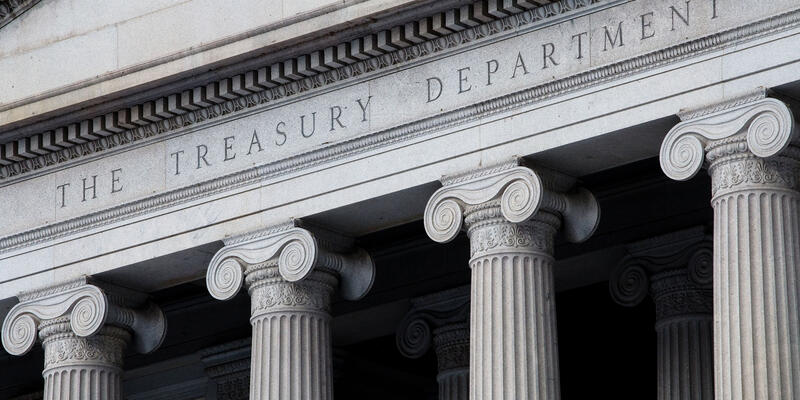
The federal government just closed its books on fiscal year 2026, and the number is ugly. Washington ran a $2.0 trillion deficit, according to the Congressional Budget Office’s monthly budget review released October 8.
That was $218 billion more than the year before. And here is the part that should end the argument over what is driving it: tax revenue went up. Spending went up a lot more.
The federal budget deficit totaled $2.0 trillion in fiscal year 2026, the Congressional Budget Office estimates, $218 billion more than the deficit recorded in fiscal year 2025. https://t.co/qEb1buILiR
— U.S. CBO (@USCBO) October 8, 2026
The numbers
CBO estimates revenue rose $169 billion, or 3 percent, mostly from larger individual income and payroll tax collections. Outlays rose an estimated $386 billion, or 6 percent.
The American Action Forum, a center-right policy group, broke down the CBO data:
- Total spending: $7.4 trillion
- Total revenue: $5.4 trillion
- Deficit as a share of the economy: 6.2 percent, up from 5.8 percent
- Debt held by the public: $32.4 trillion, about 100 percent of GDP
In plain dollars, the forum says this was the third-largest deficit in U.S. history, behind only the pandemic years of 2020 and 2021. The 2026 deficit was also about $140 billion higher than CBO had projected.
Maya MacGuineas, president of the Committee for a Responsible Federal Budget, said it “ranks among the highest deficits in our history – and the highest ever outside of a war or recession.”
Where the money went
According to the American Action Forum’s breakdown, the biggest increases came from programs that grow on autopilot:
- Social Security: up $86 billion
- Medicare: up $77 billion
- Medicaid: up $55 billion
- Veterans’ benefits: up $39 billion
- Defense: up $48 billion
Then there is interest. Net interest on the national debt rose $115 billion, or 11 percent, as the debt grew and long-term rates rose. Interest is now the second-largest item in the federal budget, behind only Social Security.
In other words, paying for past borrowing now costs more than any other single item in the budget except Social Security.
Revenue: the full picture
Individual income taxes rose $188 billion, and payroll taxes rose $67 billion on the back of higher wages, according to the forum.
Two categories fell. Corporate taxes dropped $70 billion, which the forum attributes to the One Big Beautiful Bill’s business provisions, such as larger deductions for business investment. Customs duties fell $22 billion. Tariff collections were higher early in the year but dropped sharply from May through September, after the Supreme Court ruled tariffs imposed under the International Emergency Economic Powers Act illegal. The government has issued about $130 billion in tariff refunds to businesses, the forum reported.
Even with those dips, total revenue still grew. The deficit grew anyway.
Why it matters to you
The Committee for a Responsible Federal Budget warned that interest rates have climbed considerably in recent months. Higher federal borrowing competes with families and businesses for the same pool of savings. That shows up in mortgage rates, car loans and credit cards.
The group also warned that Social Security’s retirement trust fund is heading toward insolvency in the coming years, which would trigger automatic benefit cuts under current law.
CBO is expected to release more detail on the year next month.
The bottom line
Washington does not have a revenue problem. It collected more money this year than last year, mostly from working Americans’ paychecks, and it still borrowed $2 trillion. The gap came from spending that rose more than twice as fast as revenue.
The usual answer from the left is higher taxes. But revenue already went up, and it was not close to enough. The only lasting fix is to slow the growth of spending, including the autopilot programs Congress avoids touching and the interest bill that grows every time it does nothing.
The tax cuts are not the problem. Washington’s spending is. If Congress wants lower interest rates and a safer Social Security system, it should start with the part of the budget it actually controls: what it spends.
Sources
- Congressional Budget Office: Monthly Budget Review, September 2026 (Oct. 8, 2026)
- American Action Forum: CBO: FY 2026 Budget Deficit Totaled $2 Trillion (Oct. 8, 2026)
- Committee for a Responsible Federal Budget: CBO Estimates $2.0 Trillion Deficit for Fiscal Year 2026 (Oct. 8, 2026)
Does Paul have the Fix?
Rand Paul’s Six Penny Plan is a federal budget resolution that aims to balance the U.S. budget within five years by cutting six cents from every dollar of projected spending each year. This amounts to a 6 percent annual reduction relative to current projections, so the first year would spend only 94 percent of what was expected, with the same cut repeated until balance is reached. The plan sets a firm overall spending ceiling but does not specify which programs or agencies must be reduced, leaving those decisions to Congress (Social Security is often noted as exempt). After the fifth year, spending may rise only in step with revenue growth. It targets chronic multi-trillion-dollar deficits and a national debt above $40 trillion.
Instead of shelling out dividends in a deficit, we could pass my six-penny plan and ensure a sound fiscal future for tomorrow’s America. https://t.co/dIThd23WyF
— Senator Rand Paul (@SenRandPaul) September 21, 2026